

Recently it was announced that Canada's CCUS Investment Tax Credit (ITC) would have it s eligibility extended to include CO2 enhanced oil recovery (EOR) projects as eligible destinations for captured CO2. As a news item, this almost flew under the radar; however, for those involved in the Saskatchewan oil and gas, and CCUS industries, this is very exciting news.
In short… it changes everything. The ITC had been eligible to be applied only to committed storage sites like Aquistore, but had not approved for sale to oil companies for EOR. As a result of this improvement, CCUS, once an expensive GHG mitigation technique that delivered little in the way of direct fiscal benefit to the emitter, can now be seen as a much more viable business strategy that goes along with reducing emissions.
Oil and gas producers that often withdrew from discussions around CO2-EOR because of expense and lack of CO2 availability for their fields can now see a future where carbon dioxide is more readily accessible and priced more competitively. Governments can now also envision a point where emissions are reduced, while oil production increases at the same time in a truly symbiotic relationship between emitters and users, providing a true win-win for the economy and the environment.
However…
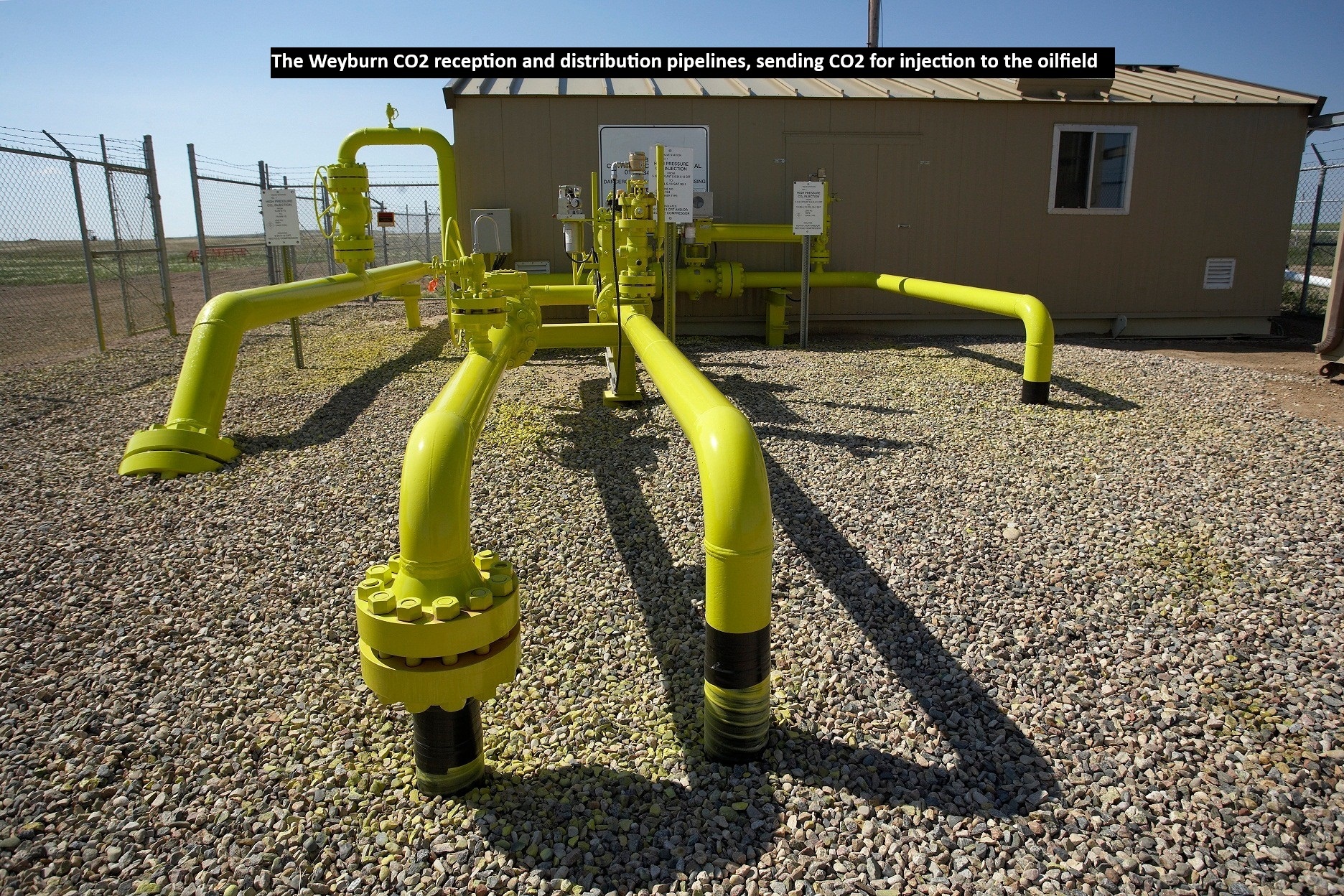
None of this will happen on its own, and it will take some time and work before benefits are realized. Here at the Petroleum Technology Research Centre (PTRC), we literally wrote the book on this stuff! Early in the PTRC’s history in the late 1990’s, we took on a massive project to determine the viability of permanent CO2 storage in association with a CO2-EOR project at Weyburn.
In the time since, it has been demonstrated that the CO2 injected at Weyburn remains stored, while almost 160 million barrels of some of the lowest emissions intensive crude oil in the world have been produced. Claims such as these have been made because of the work that the PTRC and others have done to demonstrate that CO2 injected into an oil and gas reservoir remains entrained in the reservoir, or is separated and reinjected from production streams, assuring it stays underground.
So what will it take?
The desired state for Saskatchewan is a combination of things that can only be achieved through CCUS and EOR. Our large emitters such as coal-fired power plants, refineries, potash mines and steel mills can now invest in capture technology, secure in the knowledge that they can receive their tax credits regardless of the fate of the CO2 whether stored in oil fields or saline reservoirs. Oil and gas producers can develop and prepare their fields in such a way they can take advantage of newly available pure CO2 priced competitively. Each tonne of CO2 injected into their fields will produce roughly 3 incremental barrels of oil that they otherwise would not have been able to access.
Midstream infrastructure companies can approach both entities to vie for the ability to take advantage of pipeline opportunities that will arise. Connecting CO2 sources in Regina to a user in Weyburn is both an economic challenge, but also a profit opportunity as all pipelines are.
All of these steps – capture, pipelines, and EOR fields – will take time and capital to develop. Last week’s announcement goes a long way to provide the best thing that can be given to companies who invest billions in projects like this – cost and regulatory certainty.
What can the PTRC do?
Here at the PTRC we are especially optimistic and energized by this development as we are directly aware of what CO2-EOR takes to be implemented at scale, and what we can do to help.
Our history gives us the credibility to be the leading voice for the subsurface development of CO2-EOR in existing oil fields. Our reputation shows we can bring to bear some of the most qualified people in the world working in a purpose-build EOR lab to support and advise on not only the technical but also the communications challenges that arise with EOR planning.
From field characterization, to modelling, to laboratory measurements, the PTRC will be a clear technical voice with a long history to draw from.
 To ensure the safe-and-assured storage of the injected CO2, PTRC has long-standing experts in the Measurement Monitoring and Verification (MMV) of CCS sites to ensure compliance and safety. In fact, we also significantly contributed to the ISO standards around CO2 EOR and storage that eventually many countries around the world will follow.
As a not-for profit corporation – at arm’s length from government but with a mandate to service industry by utilizing expertise from all areas of academia – PTRC will be moving forward quickly. We can provide the services and access to the expertise needed to maximize the impacts of this exciting development to industry, governments, and the people of Saskatchewan. The targets as laid out by Premier Scott Moe of a daily production rate of 600,000 barrels per day has never been more achievable than starting right now and I am confident we will reach those targets with Saskatchewan entrepreneurship from our oil industry, partnered with the experience and expertise of the PTRC.